

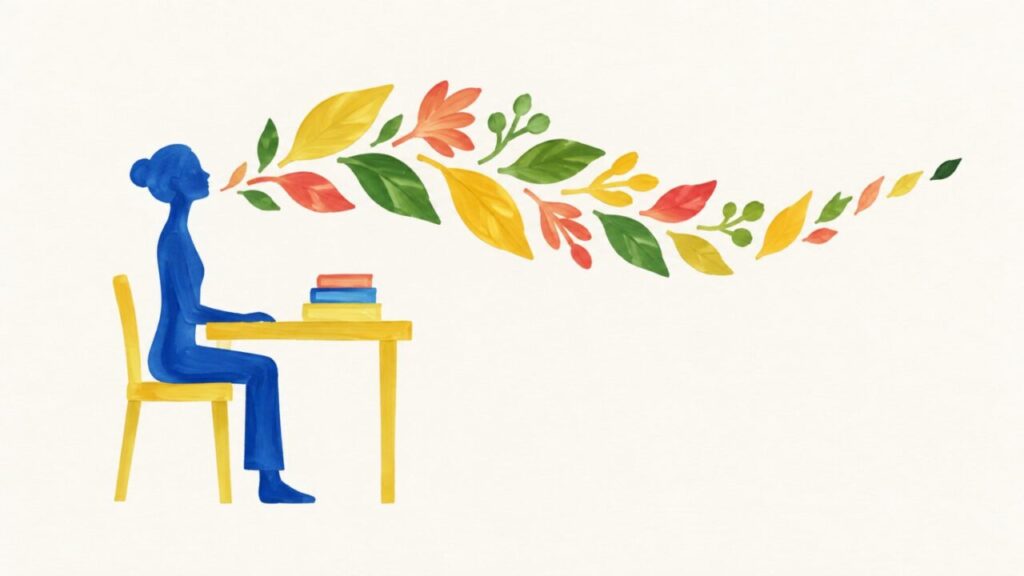
Relaxing Through Breathing Exercises in Vienna – especially during intensive learning, but also in everyday work life, relaxing is important. Breathing exercises are especially well suited to help prevent overload and burnout.
That’s why I want to show you two important exercises that use breathing to help you relax. Which one suits you best is something you can decide for yourself. Many of my clients alternate between both.
What do these exercises do?
Relaxation through targeted breathing helps you focus, become present, and actively give yourself a break. The exercises can be done anywhere. Whether at the office, at home, or while traveling, taking a few minutes for focused breaths is easy.
Relaxing Through Breathing Exercises – Exercise 1: Delaying the Inhale
This breathing technique involves consciously slowing down the inhale in order to deepen the breath and promote relaxation. Here’s how to do the exercise:
- Sit or lie down in a comfortable position, ideally upright or half-reclined.
- Close your eyes to minimize outside distractions and focus on your breathing.
- Exhale deeply to empty your lungs completely.
- Now begin to inhale, but slow the process down considerably. Silently count to three or four as you inhale. The key is to consciously slow the airflow so it can reach deep into your lungs.
- Hold your breath for a moment, usually a short count of about two.
- Then exhale slowly and evenly. Let the air escape calmly as you count to three or four again.
- Repeat this process several times, focusing on consciously slowing both the inhale and the exhale.
This breathing exercise aims to calm the mind, reduce stress, and promote relaxation. It can be especially useful when you feel stressed or anxious. By consciously slowing your breathing, you activate the parasympathetic nervous system, which leads to deeper relaxation.
Please note that breathing exercises can affect people differently. If you have health concerns or breathing problems, always consult a doctor or health professional before doing breathing exercises.
Relaxing Through Breathing Exercises – Exercise 2: The Long Exhale
This breathing technique focuses on lengthening the exhale relative to the inhale. It can help reduce stress, calm the mind, and promote relaxation. Here’s how to do the exercise:
- Find a quiet, comfortable place where you can relax. You can sit or lie down, whichever feels more comfortable.
- Close your eyes to focus on your breathing and minimize outside distractions.
- Begin with a deep inhale through the nose, counting to three or four to fill your lungs completely. Try to breathe slowly and evenly.
- Now comes the key part of the exercise: lengthen your exhale. Breathe out through your mouth, slowly counting to five or six. Let the air escape calmly and evenly as you exhale.
- Pause briefly after exhaling before inhaling again.
- Repeat this process several times, placing the emphasis on lengthening the exhale.
This breathing exercise can help activate the parasympathetic nervous system, putting the body into a relaxed state. It can be especially useful when you feel stressed, anxious, or overwhelmed. Lengthening the exhale helps release tension and calm the mind.
As with all breathing exercises, make sure you do the exercise safely and without discomfort. If you have health concerns or breathing problems, it’s advisable to consult a doctor or health professional before doing breathing exercises.
Try both exercises and pay attention to the small differences. Repeat whichever exercise suits you best. This way, relaxation through breathing exercises becomes a sustainable part of everyday life.
More on relaxation techniques: Life Coaching in Vienna
Frequently Asked Questions
How do breathing exercises help with stress and burnout?
Targeted, slowed breathing activates the parasympathetic nervous system — the part of the nervous system responsible for rest and relaxation. This lowers the body’s physical stress response and helps you focus and become present.
How does the “Delaying the Inhale” exercise work?
You consciously breathe in slowly, counting to three or four, hold your breath briefly, and then breathe out just as slowly. The key is consciously slowing down the inhale so the air reaches deep into your lungs.
How does the “Long Exhale” exercise work?
Here the focus is on a longer exhale compared to the inhale — inhaling for about three to four counts, exhaling for five to six counts. The extended exhale specifically supports activation of the parasympathetic nervous system.
When should you be cautious with breathing exercises?
If you have health concerns or existing breathing problems, always consult a doctor or health professional before doing breathing exercises. The exercises also affect people differently.