

Coaching Explained
I’ve already written about presence itself — that quality of simply being in the here and now. The body scan is one of the most direct ways to actually practice it, one region of the body at a time.
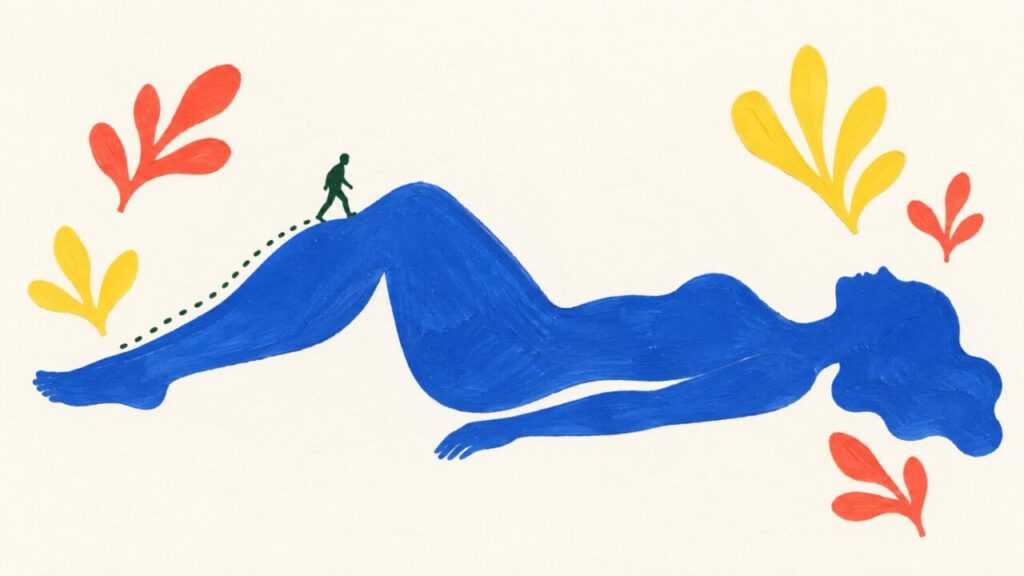
The body scan is a mindfulness meditation method developed by Jon Kabat-Zinn for practicing presence. The practice centers on systematically and deliberately exploring your own body — typically starting at the feet and moving slowly all the way up to the head. You direct your attention to each region in turn, noticing sensations like tension, warmth, or coolness, without judging or evaluating what you find. The goal is to build a deep connection to your own body, recognize tension, and uncover potential sources of stress. The practice supports relaxation and mindfulness, and can meaningfully reduce stress.
Body Scan Instructions, Step by Step
The body scan is a simple but powerful mindfulness exercise — and because it’s so accessible, it works well even for complete beginners. You don’t need prior experience or any special equipment. Start by lying down comfortably on a mat or your bed. Gently close your eyes and let your arms rest loosely at your sides. Breathe deeply in and out a few times before beginning the exercise itself.
Start by consciously noticing your feet and any sensations there. Do you feel warmth, tingling, or perhaps even numbness? Stay with each body region for a few breaths before moving on. Then slowly work your way up through the lower legs and knees, noticing whether you feel tension or ease. Consciously release each area as your attention moves on.
Continue up through the thighs, pelvis, and stomach — the stomach often reacts especially sensitively to stress and inner unrest. Then move through the chest, shoulders, and arms down to the fingertips. Take care to simply notice rather than judge. Continue to the neck, face, and head. Close the exercise by sensing your whole body once more as a single unit. Breathe deeply and slowly open your eyes. People who bring this practice regularly into their daily life tend to notice meaningful changes fairly quickly.
When and How Often Should You Practice?
Consistency matters most with the body scan, because mindfulness is a trainable skill — and like any training, it needs regularity and patience. Practicing daily is ideal, but even three times a week brings noticeable results. Many people wonder about the best time of day. Right after waking up in the morning works particularly well, since the mind is still calm and unburdened by the day ahead.
In the evening, on the other hand, the body scan helps you let go of the day — it gently prepares body and mind for sleep by calming the nervous system. Many practitioners report falling asleep faster and sleeping more deeply. The ideal session length is somewhere between 10 and 30 minutes, depending on your time and experience. Beginners often start with 10 to 15 minutes and build up from there, while more experienced practitioners enjoy longer 20-to-30-minute sessions for a deeper effect.
It helps to choose a fixed place and a fixed time — rituals help the brain slip into a meditative state more quickly. Keep a mat or blanket ready so you can start right away. A short breathing ritual beforehand can ease you into the practice further. Even short 10-minute sessions are valuable, since consistency matters more than length. Over time, you’ll notice your body awareness growing and a stronger overall sense of presence.
The Body Scan in Life Coaching — How Mindfulness Helps
In modern life, stress and overload have unfortunately become common companions — and because so many people rarely find real rest, the demand for effective methods keeps growing. The body scan is a central tool in life coaching, because it works directly and immediately. It helps recognize chronic tension before it turns into pain. Through regular practice, clients learn to notice stress signals early and adjust course in time — which is especially valuable, since many burdens would otherwise stay unconscious.
Self-awareness is one of the most important skills the body scan builds. Someone who knows their body well also understands their emotional states better. In the coaching process, physical sensations are deliberately connected to inner beliefs, creating a deeper understanding of why certain situations trigger stress. These insights open up new possibilities for action, since awareness is always the first step toward change — and emotional regulation becomes noticeably easier and more sustainable as a result.
Mindfulness-based methods like the body scan also build emotional intelligence over time. They help people notice and process feelings consciously instead of suppressing them. Those who bring this practice into their coaching report a stronger sense of inner stability — and the same presence carries over outside coaching sessions too, whether before a difficult conversation, in a stressful moment at work, or simply as a brief, conscious pause. Over time, the body scan becomes a reliable anchor for inner calm and clarity.
Frequently Asked Questions
What is a body scan?
The body scan is a mindfulness meditation developed by Jon Kabat-Zinn, in which attention moves systematically from the feet to the head through the entire body. Sensations like tension, warmth, or tingling are consciously noticed, without evaluating them.
What’s the best time to practice?
Right after waking up works particularly well, since the mind is still calm. In the evening, the body scan helps you let go of the day and fall asleep more easily. Both times of day have their own advantages.
How long should a session last?
The ideal length is between 10 and 30 minutes. Beginners usually start with 10 to 15 minutes and build up over time, while more experienced practitioners often prefer longer 20-to-30-minute sessions.
How does this mindfulness exercise help in coaching?
In life coaching, the body scan is used to recognize chronic tension early and to connect physical sensations with inner beliefs — creating a deeper understanding of why certain situations trigger stress.